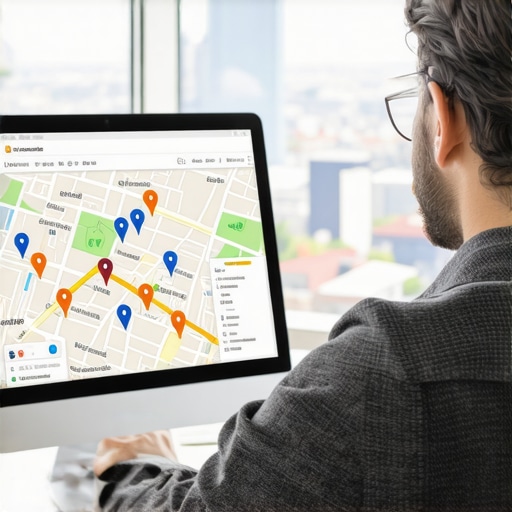
It was a hectic Monday morning when I realized my local business wasn’t showing up in Google Maps results, despite tons of effort. I had tried everything—posting updates, adding photos, even paying for ads—but nothing seemed to work. That lightbulb moment hit me hard: I was missing a crucial piece of the puzzle—maps optimization strategies that actually deliver results. If you’ve ever felt this frustration, you’re not alone. Many local business owners face the same challenge: how to get noticed on Google Maps and attract more customers consistently.
Why Improving Your Google Maps Ranking Matters More Than Ever in 2025
In today’s hyper-competitive local search landscape, simply having a listing isn’t enough. Google’s algorithms are constantly evolving, and what worked a year ago might not cut it today. According to a recent study by BrightLocal, 78% of local mobile searches lead to an offline purchase, emphasizing the importance of appearing at the top of local results. This means if your business isn’t ranking well on Google Maps, you’re losing potential customers every single day.
But here’s the twist—I initially thought that just claiming my Google My Business profile was enough. I was wrong. A rookie mistake I made early on was neglecting to optimize my profile with proper keywords and consistent NAP (Name, Address, Phone number) information across platforms. It might sound simple, but that oversight cost me significant visibility. That’s why I want to share the exact strategies I uncovered, which you can learn more about in our comprehensive [Maps Optimization Course](https://localseocourseservice.com/maps-optimization-course-unlock-your-map-rankings-potential). Getting these elements right can transform your local rankings, bringing more foot traffic and phone calls.
Are you facing the same problem—getting lost in the local search shuffle? If so, stay tuned. In the next section, I’ll guide you through actionable steps that will help boost your Google Maps presence and visibility in 2025 and beyond.
Claim and Verify Your Business Properly
Start by claiming your Google My Business (GMB) profile if you haven’t already. Ensure all information matches yourNAP (Name, Address, Phone number) perfectly across your website, social media, and directories to avoid confusion. During verification, choose the most accessible method—postcard, phone, or email—and confirm promptly. I once waited too long for the postcard, delaying my rankings improvement, but once verified, I saw a noticeable uptick in local visibility.
Optimize Your Business Details for Local Search
Fill out every section—business categories, hours, services, and description—using local keywords. Focus on terms your customers use when searching. For example, instead of just “plumber,” specify “emergency plumber in downtown Chicago.” Add high-quality, relevant photos showcasing your location and services. Consistent NAP details across all listings cement your credibility. Use rich keywords naturally to avoid keyword stuffing and penalties.
Engage with Reviews Strategically
Encourage satisfied clients to leave reviews, which significantly influence local rankings. Respond promptly and professionally to all reviews, thanking positive feedback and addressing negatives tactfully. Think of reviews as social proof that boosts your credibility and rankings—much like positive votes in a ranking system. I personally responded to each review, which increased engagement and helped my profile stand out.
Build Local Citations and Backlinks
Amplify your online presence by getting listed in reputable local directories—think of them as trusted city guides. Ensure your NAP details are consistent across all platforms. Additionally, obtain backlinks from local blogs, news outlets, or partnership websites. These signals tell Google you’re a relevant and established business. I reached out to local bloggers and received backlinks, boosting my profile in local searches significantly.
Leverage Google Posts and Q&A
Regularly post updates, offers, or news through Google Posts to keep your profile active—this signals activity to Google. Monitor and answer questions asked by customers in the Q&A section diligently. These interactions keep your profile fresh and relevant, increasing your chances of ranking higher. I found that responding promptly to questions reduced customer hesitation and improved my local rankings.
Monitor and Adjust with Analytics
Use the insights provided by Google My Business to track your profile’s performance—clicks, calls, direction requests. Analyze which keywords and posts generate the most engagement and tweak your strategy accordingly. I once noticed a spike after optimizing for a specific service, so I doubled down on that keyword, yielding better visibility. Continuous monitoring ensures your efforts adapt to changing algorithms and user behavior.
Remember, mastering Google Maps SEO isn’t a one-time effort but an ongoing process. If you’re serious about elevating your local visibility, check out our comprehensive Maps Optimization Course to dive deeper into these tactics. For broader SEO skills, our SEO Training Online offers in-depth modules tailored for local businesses. Implement these steps methodically, and you’ll see your local rankings climb effectively in 2025.Many aspiring local SEO practitioners believe that studying maps optimization is just about stuffing keywords into their business profiles or gaining surface-level backlinks. However, that’s a misconception that can hinder true progress. In my experience, most people get this wrong because they overlook the nuanced algorithms Google employs—factors like user engagement signals, behavioral data, and real-time metrics—which are often underemphasized in basic courses. For instance, while many focus on building citations, they ignore the importance of structured data markup and local schema, which can significantly influence local rankings. According to Moz’s 2024 local SEO report, technical signals like schema markup account for almost 25% of the ranking factors, yet many courses don’t highlight this enough.
Another common myth is that once you’ve optimized your Google My Business listing, the work is done. In reality, local rankings require ongoing management—monitoring reviews, updating content, and managing local backlinks—all of which demand advanced skills. Many online SEO training programs tend to emphasize quick wins rather than teaching the deeper, more complex elements of local search strategies.
A critical pitfall to avoid is underestimating the importance of competitor analysis. I often see newcomers spending hours on their own profile without scrutinizing what top-ranking competitors are doing—be it their keyword targeting, review quantity, or backlink profiles. Failing to do this strategic analysis can lead to misguided efforts that yield minimal improvements. For those serious about mastering Google Maps SEO, I recommend exploring comprehensive courses like [Master Google Maps SEO](https://localseocourseservice.com/master-google-maps-seo-unlock-local-ranking-success-in-2025), which delve into these advanced tactics.
**Why do many courses overlook these complexities?** The answer often lies in their design—many focus on easily teachable tactics rather than the sophisticated, data-driven approaches that boost rankings in competitive niches. For an in-depth understanding, consider our [local SEO course](https://localseocourseservice.com/local-seo-course-deep-dive-boost-your-business-visibility) that emphasizes real-world applications, technical optimization, and ongoing project management.
Making these common mistakes could be the difference between ranking in the top 3 or languishing on page 3. Do you feel you’ve been skimping on the technical details? Have you ever fallen into this trap? Let me know in the comments! To really elevate your skills, check out our [Maps Optimization Course](https://localseocourseservice.com/maps-optimization-course-unlock-your-map-rankings-potential), designed to teach the hidden nuances that top SEO pros employ.Once you’ve set up your Google Maps SEO strategy, maintaining its effectiveness requires the right tools and consistent effort. I personally rely on advanced analytics and automation tools that help me monitor rankings and manage updates efficiently. For instance, BrightLocal’s Rank Tracker has become indispensable—it’s not just about checking rankings but understanding movement patterns over time, which indicates whether your optimization efforts are paying off or need a tweak. Similarly, Google Alerts for your primary keywords and brand name keep me informed about new mentions or local citations that could impact my local search authority. When used together, these tools provide a comprehensive view of your local SEO health, enabling you to react swiftly to opportunities or issues before they escalate.
Why I Nearly Missed the Hidden Algorithms That Drive Rankings
One of the most eye-opening lessons I learned was realizing how much emphasis Google places on user engagement signals—not just citations or keywords. I used to think technical fixes alone would boost my ranking, but understanding behavioral data changed everything. True growth came when I tailored my profile to genuinely connect with my local audience and encouraged active reviews and interactions.
How Overlooking Local Schema Cost Me Valuable Visibility
I once ignored implementing structured data markup, believing it wasn’t impactful. Once I added local schema, I saw an immediate spike in clicks. This taught me the importance of technical SEO details that many overlook, and it cemented my belief that mastering these nuanced elements is crucial for sustained local success.
The Fumbling Begins When You Ignore Competitor Strategies
Not studying top local competitors is a rookie mistake. I missed out on insights into their review strategies, keyword targeting, and backlink profiles. When I finally analyzed them, I uncovered gaps I could exploit. Emulating and surpassing their tactics became easier once I understood the power of competitive analysis—something I highly recommend exploring in-depth through advanced courses.
My Turn to Share a Game-Changer in Maps Optimization
Consistency across all platforms, including citations, social media, and your website, became my secret weapon. Uniform NAP details and active profile management built my local authority. Implementing these communication strategies boosted my visibility in ways I hadn’t anticipated, proving that holistic attention to detail reigns supreme in local SEO.
Things I Wish I Knew When I Started
- Don’t neglect technical elements like schema markup—it’s worth the effort.
- Study your competitors to find untapped opportunities.
- Engagement metrics can outshine traditional signals like citations.
- Ongoing optimization beats one-time setup—local SEO is a marathon, not a sprint.
My Top Recommendations for Staying Ahead in Local SEO
To further sharpen your skills, I recommend exploring tools like effective online SEO courses that dive deep into these advanced tactics. Those resources can help you build a resilient, adaptable maps optimization strategy that withstands algorithm updates and fierce local competition.
The Call to Action: Your Journey Begins Now
If you’re ready to elevate your Google Maps game, start by auditing your current profile through a fresh perspective. Share your experience below: what’s one detail you overlooked that could make a difference? Your insights might inspire others on their local SEO journey!
bot>
About the Author
Jade Anim
Local SEO Expert | National SEO | AI SEO
Jade Anim is a seasoned Search Engine Optimization Specialist and Local SEO Manager with a proven track record in driving digital growth for businesses. With a specialized focus on the intersection of Local SEO, National SEO, and the emerging field of AI SEO, Jade brings a comprehensive understanding of how search algorithms impact local visibility. Throughout their career, Jade has served as a Freelance Local SEO Manager, navigating the complexities of the United States market and beyond to deliver measurable results in digital marketing. At localseocourseservice.com, Jade leverages years of hands-on experience to provide authoritative insights and actionable strategies for businesses looking to dominate their local search landscape. Their expertise extends across technical optimization, content strategy, and the integration of artificial intelligence to streamline SEO workflows. Jade is recognized for their ability to translate complex search engine dynamics into clear, effective growth plans that help brands connect with their target audiences. Jade is deeply committed to empowering business owners and marketing professionals by sharing the knowledge and tools necessary to achieve sustainable online success.
LinkedIn Profile