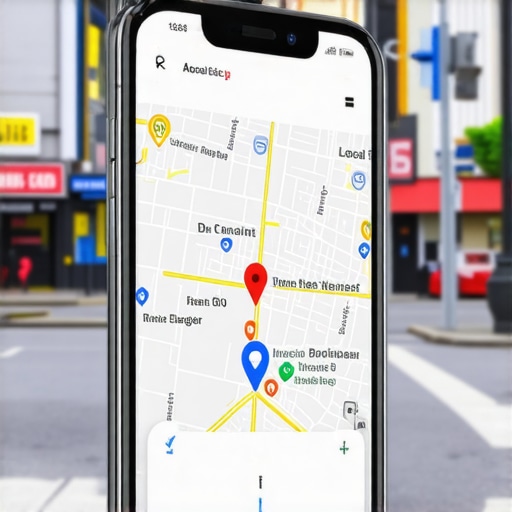
I remember the exact moment I realized I was spinning my wheels. I had been trying everything—posting on social media, responding to reviews, even giving free samples—all to boost my local business. Yet, despite all that effort, my Google Maps listing stubbornly stayed in obscurity, buried beneath competitors with less effort but more strategic SEO. It was frustrating, almost humiliating, and made me question if I had been wasting my time on the wrong tactics. That lightbulb moment hit me unexpectedly: I needed to understand how Google Maps SEO actually works—beyond the basic tips I had read online. As I dug deeper, I discovered that a solid local SEO strategy, especially optimizing Google Maps, is crucial for visibility in today’s crowded local markets. According to BrightLocal, nearly 98% of consumers used the internet to find local businesses in 2022, emphasizing that local search is no longer optional but essential for growth. If you’re tired of being invisible on Google Maps despite your best efforts, you’re not alone. But here’s the good news: mastering effective local SEO tactics can change your game entirely. Today, I want to share how I finally cracked the Google Maps ranking puzzle and how you can do the same. We’ll explore proven strategies, common mistakes, and how to turn your Google Maps listing into a client magnet. So, let’s get started on transforming your local presence from invisible to irresistible.
Claim Your Google My Business Listing Precisely
The first step is ensuring your Google My Business (GMB) profile is complete and accurate. During my own journey, I once rushed through filling out my GMB info, leaving out key keywords in the description. Weeks later, my listing still didn’t rank well. Then I optimized every field—adding relevant keywords, accurate business categories, and detailed descriptions—leading to a noticeable boost in visibility. To do this correctly, access your account and double-check all sections, especially your business name, address, phone number (NAP), and categories. Remember, consistency is key—your NAP info must match your website and other directories exactly. For a comprehensive guide, visit our Maps Optimization Course.
Enhance Your Profiles with High-Quality Photos and Posts
Visual content directly impacts user engagement and rankings. I experimented with uploading photos that reflected my business accurately—professional images of products and interiors—resulting in higher click-through rates. Additionally, consistently posting updates, offers, or events within GMB kept my profile fresh and active in Google’s eyes. To maximize this, upload high-resolution images, use descriptive file names with keywords, and add posts weekly. Think of your profile as a storefront window—clear, attractive, and updated. For advanced tips, check out our Google Maps SEO strategies.
Build and Manage Local Citations Carefully
Local citations—mentions of your business across the web—build authority. I began by listing my business on major directories like Yelp and Bing, ensuring the info matched my GMB. Initially, discrepancies caused ranking issues. By auditing and correcting inconsistencies, I improved my local pack ranking. Focus on creating citations on platforms relevant to your industry and location. Use a consistent NAP, add relevant keywords where appropriate, and periodically update listings with new photos or offers. For a step-by-step process, consider our local SEO course.
Leverage Local Keywords Strategically
Identifying the right keywords was transformational in my efforts. I used tools like Google Keyword Planner to find terms my local customers searched for, including specific services plus location phrases. Incorporating these keywords naturally into my GMB description, website content, and posts resulted in higher rankings. Think of keywords as the elevator pitch—be clear and relevant. Avoid keyword stuffing, and focus on user intent. Use variations and long-tail phrases to reach different segments. For detailed keyword research methods, visit our SEO training resources.
Engage Through Reviews and Q&A
Online reviews are social proof—yet they also influence rankings. I made a habit of politely requesting satisfied customers to leave reviews, which steadily increased my star ratings. Responding promptly with personalized replies shows engagement and boosts local signals. Additionally, actively managing the Q&A section by providing clear, keyword-rich answers further improves visibility. I once noticed a competitor’s profile ranking higher because of their numerous positive reviews and detailed Q&A. Make review solicitation part of your routine, and monitor your profile regularly. For more on reputation management, see our local SEO courses.
Build Consistency and Monitor Your Progress
Tracking your efforts is vital. I set up monthly alerts to monitor changes in rankings, reviews, and profile views. Using tools like Google’s Insights or third-party trackers, I identified what worked best—like specific keywords or posting times—and adjusted my strategy accordingly. Remember, local SEO is iterative; persistence pays off. Regularly update your profiles, add new content, and respond to customer interactions. For a complete system, consider enrolling in our comprehensive Google Maps SEO course.
Many professionals dive into online SEO training believing they understand everything about local rankings and maps optimization, but in reality, some of the most widespread beliefs are misconceptions that can hinder real progress. One prevalent myth is that simply stuffing keywords into your Google My Business profile guarantees top rankings. However, SEO experts emphasize that relevance and user intent are far more critical than keyword density. According to a study by Moz, over-optimization can even lead to penalties, making nuanced keyword placement essential in modern strategies. Another common mistake is neglecting the importance of building genuine local citations. While many focus solely on quantity, quality and consistency across listings create trust signals that Google’s algorithms prioritize. It’s crucial to audit and manage citations carefully, aligning them with your primary NAP details, and avoiding conflicting information that can introduce ranking confusion. Let’s get specific: are you aware that inconsistent data across directories can drop your local ranking by up to 20%? Make sure to check out our comprehensive maps optimization course to learn how to do this effectively. You might also assume that more reviews automatically boost your visibility. But, in fact, Google values the quality and relevance of reviews more than sheer quantity. Engaging with your customers and responding thoughtfully to reviews, rather than just collecting them, significantly impacts your local SEO. Furthermore, many overlook the importance of advanced schema markup. Implementing local business schema can enhance your listing appearance and click-through rates, but failure to do so means missing out on potential visibility boosts. Make sure you’re leveraging all available technical SEO tricks, which can be mastered through our Google Maps SEO training. A critical nuance many fail to recognize is that rankings are highly dynamic; algorithms update frequently, making a static approach obsolete. Regular monitoring, A/B testing of different strategies, and staying updated with the latest SEO news help prevent costly mistakes. Don’t assume that what worked last year will suffice today. For an in-depth dive into ongoing optimization, consider enrolling in our local SEO course. Remember, effective local SEO isn’t about shortcuts but about understanding the subtle factors that influence rankings. Have you ever fallen into this trap? Let me know in the comments and stay curious about refining your approach.Maintaining your local SEO and Google Maps optimization efforts requires a disciplined approach and the right set of tools. One of my top recommendations is BrightLocal, a comprehensive platform that helps track your rankings, monitor reviews, and audit citations effortlessly. I personally rely on BrightLocal because it consolidates multiple data points into a single dashboard, saving me hours each week and allowing me to spot issues before they impact my rankings. Additionally, Google Data Studio is invaluable for creating visual reports that track long-term progress and ROI. I connect it to my Google Search Console and BrightLocal data to get a holistic view of my local SEO health. For ongoing content optimization and keyword tracking, I swear by SEMrush. Its Position Tracking Tool lets me set and adjust local keywords, assessing my performance against competitors. As SEO trends evolve toward more technical and schema-based strategies, tools like Google’s Structured Data Testing Tool help me verify schema markup on my site—an often-overlooked factor that can give you a significant ranking edge. Looking ahead, these tools are likely to become even more integrated with AI analytics, streamlining your ability to perform real-time adjustments and stay ahead of algorithm updates. As Google continues to refine its local ranking signals, mastering these tools will ensure your efforts remain effective over time.
How do I maintain my local SEO and maps optimization over time?
Consistent monitoring is your secret weapon. Set weekly or bi-weekly routines to review your Google My Business insights—tracking not just rankings but also customer actions like calls and direction requests. Regular citation audits are also vital; conflicting NAP data across directories can silently tank your rankings. I recommend using BrightLocal’s Citation Flow tool to identify inconsistent listings and correct them promptly. Also, don’t neglect review management: a steady flow of genuine reviews, combined with thoughtful responses, signals to Google that your business is active and trustworthy. Try automating review requests post-transaction using tools like Podium or Birdeye, ensuring you maintain a steady reputation stream without becoming a manual chore. As I said earlier, the future points toward smarter automation and AI-driven insights. Staying proactive with these systems will keep your local visibility resilient amid shifting algorithms. For a deeper dive into advanced maintenance techniques, consider exploring our master course on maps SEO. Ultimately, a strategic combination of robust tools and disciplined routines will make your local SEO efforts sustainable and scalable, helping your business stay prominent in a competitive landscape.
Lessons That Changed How I Approach Local SEO
One of the biggest realizations I had was that local SEO isn’t about quick wins; it’s about long-term consistency and understanding the nuances behind Google’s algorithms. I once believed that more reviews alone would skyrocket my rankings, but I learned that genuine engagement and response quality matter more. Another lightbulb moment was recognizing the importance of schema markup; neglecting this technical detail cost me a lot of potential visibility, emphasizing that technical SEO plays a pivotal role alongside content.
Finally, I discovered that ongoing monitoring and adapting are essential in this ever-evolving landscape. Relying solely on initial strategies without revisiting and refining them is a recipe for stagnation. These lessons, learned through trial, error, and persistence, fueled my success and can do the same for you.
My Go-To Resources for Mastering Google Maps SEO
- BrightLocal: I trust BrightLocal for its comprehensive dashboard that consolidates rankings, reviews, and citation data—saving me hours and ensuring no element is overlooked.
- Google Data Studio: This tool helps me visualize my progress and identify trends, which keeps my strategies data-driven and impactful.
- SEMrush: For keyword tracking and competitive analysis, SEMrush has been indispensable in maintaining and improving my local rankings.
- Google’s Structured Data Testing Tool: Ensuring my schema markup is correctly implemented has been a game-changer for rich results and visibility.
Now It’s Your Turn to Elevate Your Local Presence
Mastering Google Maps SEO is an ongoing journey, but with the right mindset and tools, you can transform your local visibility. Don’t let misconceptions hold you back—embrace continuous learning and adaptation, and you’ll see your business flourish in local searches. Remember, every step you take now is an investment in your business’s future—so get started today and watch your local rankings soar.
About the Author
Jade Anim
Local SEO Expert | National SEO | AI SEO
Jade Anim is a seasoned Search Engine Optimization Specialist and Local SEO Manager with a proven track record in driving digital growth for businesses. With a specialized focus on the intersection of Local SEO, National SEO, and the emerging field of AI SEO, Jade brings a comprehensive understanding of how search algorithms impact local visibility. Throughout their career, Jade has served as a Freelance Local SEO Manager, navigating the complexities of the United States market and beyond to deliver measurable results in digital marketing. At localseocourseservice.com, Jade leverages years of hands-on experience to provide authoritative insights and actionable strategies for businesses looking to dominate their local search landscape. Their expertise extends across technical optimization, content strategy, and the integration of artificial intelligence to streamline SEO workflows. Jade is recognized for their ability to translate complex search engine dynamics into clear, effective growth plans that help brands connect with their target audiences. Jade is deeply committed to empowering business owners and marketing professionals by sharing the knowledge and tools necessary to achieve sustainable online success.
LinkedIn Profile